5 myths about digital solutions in agribusiness
The world of agribusiness is changing faster than ever before. Just a few years ago, digital solutions seemed distant and complex—drones, sensors, ERP systems, or electronic field maps. But today, they have become a familiar working tool for agronomists, engineers, accountants, and farm managers. Along with the development of technology, many myths have emerged that prevent companies from taking the next step in digitalization.
The first and probably most common myth is that digital solutions are only suitable for large agricultural holdings.
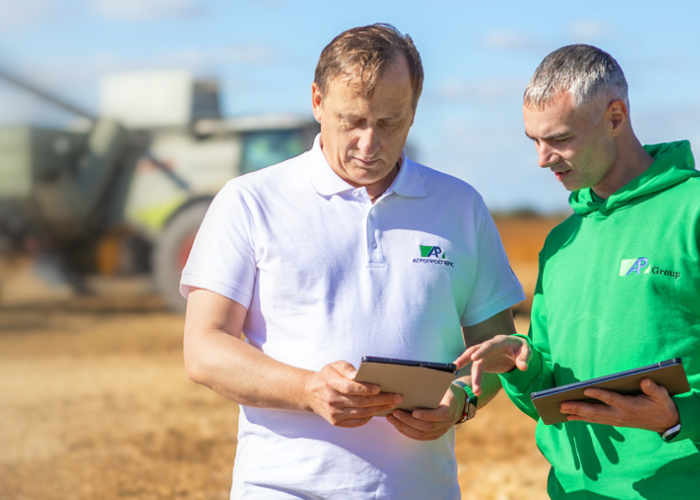
In reality, this has not been the case for a long time. Modern systems are not designed to complicate processes, but to make them accessible even to small farms. Today, you can keep track of agricultural operations, plan crop rotations, view field maps, and control expenses directly from your tablet — without specialists or large investments. For example, the AP Agronomist app allows agronomists to control field work, record completed tasks, analyze data, and plan for the next season without paper bureaucracy. So digital tools are not the prerogative of holdings, but an opportunity for any farm to work more efficiently.
The second myth is that digitization is expensive and does not pay off.
This perception dates back to the days when implementing a system required separate servers and specialized knowledge. Today, digital solutions have become simple, mobile, and affordable. Moreover, they bring tangible economic benefits. When a farm switches from paper records to an automated accounting system, duplication of work, loss of resources, and unnecessary expenses disappear. According to McKinsey, companies that have implemented digital systems increase their margins by 7–15% and reduce fertilizer costs by up to 20%. Therefore, digitalization is not an expense but an investment that quickly pays for itself through accurate planning, analytics, and control.
The third myth is: “Digital solutions are too complex for agronomists to understand.”
This may have been partially true in the past, but modern interfaces are designed not for IT specialists, but for those who work in the field. Today's systems are as simple as possible: a map of fields, a list of tasks, and a “create report” button. Everything is clear even to those who have never worked with technology. Data is automatically synchronized, calculations are performed by the system, and creating a report takes a few minutes. The goal of platforms such as AP Agronomist is not to burden the user, but to free them from unnecessary routine tasks.
Another common myth is that digitalization only applies to technology, not management decisions.
People often confuse “digital” with “hardware”: drones, sensors, GPS navigators. In reality, these are just tools; the most important thing is the data and decisions they help to make. A digital platform does not just collect information, it analyzes it: which fields are effective, where costs can be reduced, when it is better to apply fertilizers, which crops are more profitable to grow next year. All this is about management, not technology. After all, technology only makes sense when it helps to make informed, analytical decisions.
The fifth myth concerns security — that transferring data to the system is dangerous, as it could be lost or stolen.
But modern solutions have multi-level protection, encryption, backup storage, and restricted access. In systems such as AP Agronomist, each user sees only the part of the data that relates to their work: agronomists see their fields, accountants see their reports, and managers see general analytics. This is not only convenient, but also safer than traditional paper journals or flash drives, which are easy to lose or damage.
In fact, digitalization is already a reality in agribusiness. It helps to see the whole picture of the farm in real time, make decisions based on facts rather than intuition, and work efficiently at every stage of the production process. It does not require millions in investment, complex technical knowledge, or specialists — just a desire to develop and use modern tools.