A day in the life of a modern agronomist: how AP Agronomist is transforming field work
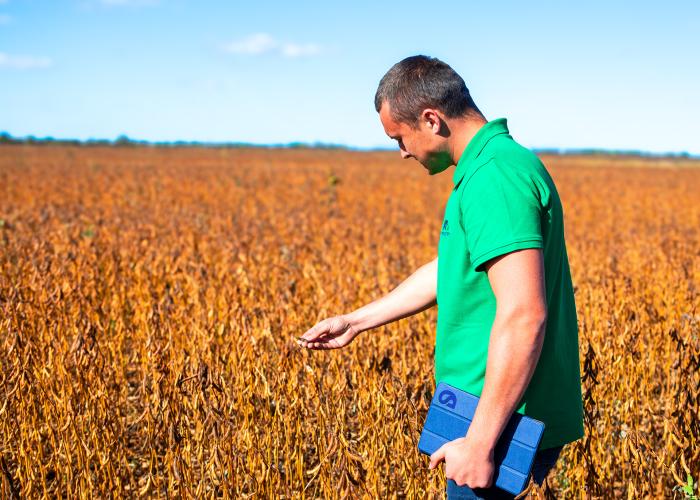
Dawn. Dew still glistens on the leaves, and the agronomist is already on his way. His tablet contains not just maps of the fields, but a real digital diary of the season. Every hectare has its own history, every crop its own growth rate. And this is where AP Agronomist comes in — a tool that sets a new standard for field work.
07:30 a.m. — Morning monitoring
The first thing the agronomist does is open the field map in the app. Everything is on the screen: current boundaries, crop history, crop structure, and the status of agricultural operations.
With a few taps, the system shows which fields are scheduled for maintenance today, where harvesting is expected, and where the condition of crops needs to be checked after rain.
10:00 a.m. — Departure to the fields
The plan for the day is set — it's time to hit the road. Once on site, the agronomist opens the inspection report. All they need to do is take a photo of the plot, add a comment, and save the result.
The system automatically syncs the data with ERP so that all colleagues can see the latest information in real time. No more manual recording — everything is already in the analytics.
12:30 p.m. — Weather analysis and planning
Lunch break is the perfect time to check the weather conditions.
AP Agronomist displays the forecast, and the system suggests the optimal period for applying chemicals. Green means favorable conditions, red means it's better to wait.
This allows you to plan treatments more accurately, reduce costs, and increase the efficiency of each action.
3:00 p.m. — Filling out maintenance reports
After the inspection, the agronomist opens the agricultural operations section.
Harrowing, cultivation, application of mineral fertilizers, feeding, watering — each process is recorded in a few minutes.
The crop, equipment, operators, scope of work, and materials are selected. The system stores all data, and ERP generates reports automatically.
5:30 p.m. — Summary of the day
Before finishing work, a brief analysis of the results is performed. All data is already synchronized: reports, photos, areas, resources used.
The statistics section shows the remaining materials, planned operations, and a complete work schedule. This is digital control in action — when every day is backed up by analytics.
8:00 p.m. — Season planning
As the day draws to a close, the agronomist opens the planning section.
Here, crop rotation is planned, crops for the following year are determined, and needs are forecast — from seeds to equipment.
The system helps to see not only the current state of the field, but also the outlook for the coming season.
A digital assistant that changes the approach
AP Agronomist has become a modern management tool for agronomists.
It combines field work, analytics, weather data, and an ERP system in a single ecosystem. This transforms agronomists into analysts who make decisions based on facts and see the big picture of the production cycle.
AP Agronomist is a new rhythm of work for agronomists, based on digital precision.