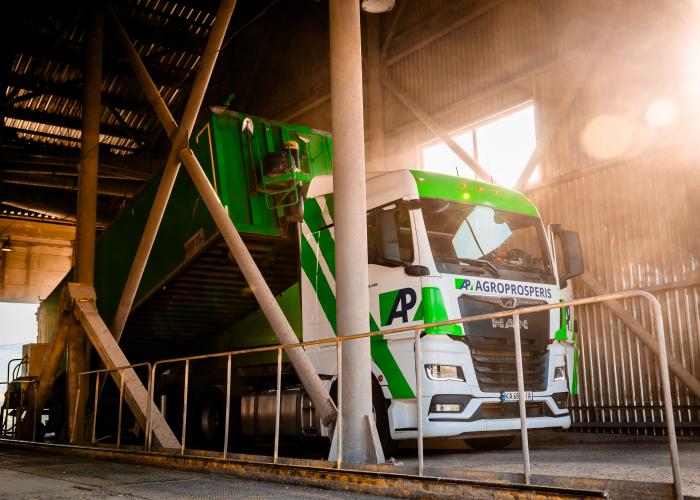
Efficient logistics: how agribusiness saves time and money
Logistics in agriculture is time management. During the season, an hour of truck downtime turns into a chain reaction: missed slots at the elevator, schedule changes, team overload, additional fuel and repair costs. Those who make logistics a system rather than relying on the “heroism” of the dispatcher will win.
Where losses occur in agricultural logistics
Queues and waiting. The elevator operates in waves, vehicles arrive randomly, the dispatcher manually balances the flow, and drivers wait. Downtime becomes the norm — and turns into direct costs.
Scattered channels and different “versions of the truth.” One flight list in Excel, clarifications in chat, changes—by phone. When data lives in several places, errors become systemic: duplicate flights, confusion with statuses, missed time windows.
Repairs during the season. When maintenance is done “as needed,” vehicles are taken out of service just when they are needed most. And this affects the entire chain — from the field to the elevator.
Routes “by habit.” Extra kilometers and empty runs are rarely noticeable at the moment. But they are often what eats into profits — steadily and quietly.
What digital logistics is changing
The key difference is simple: decisions are made based on data, and the process has its own logic — from application to flight closure. When all events are recorded in the system, control, predictability, and speed appear.
How Agroprosperis Digital Solutions does it
Flights and dispatching. One circuit for planning, assignments, statuses, and change history: less manual coordination, greater control. AP Logistics and AP Checkman work in this block — for flight registration, performance control, real-time vehicle tracking, and photo recording of loading/unloading.
Vehicle fleet, maintenance, and repairs. Scheduled maintenance, transparent equipment status, and breakdown cause analysis. The result is higher vehicle readiness during the season. AP Logistics (as a process circuit) + AP Engineer (maintenance, repair, control, and reminders) are connected here.
Electronic queue at the elevator. Smooth flow, slots, waiting control. This relieves tension at the point and puts hours back on schedule. AP Elevator Queue is used for this — a Telegram bot for quick registration of vehicles for loading/unloading.
Logistics analytics. Simple metrics that change management: downtime, deviations, loading, efficiency by route, and transport unit. This covers AP Rating TV and AP Checkman — monitoring of transport, stops, downtime, and route compliance, plus a clear management picture of the work of equipment in the field and mechanics.
How to get started without a “big rollout”
A small launch works best: one elevator, one cluster, one type of transportation. The team sees the results in practice, and the process scales quickly.
Efficient logistics begins with transparency. When a business sees time, it begins to manage it.